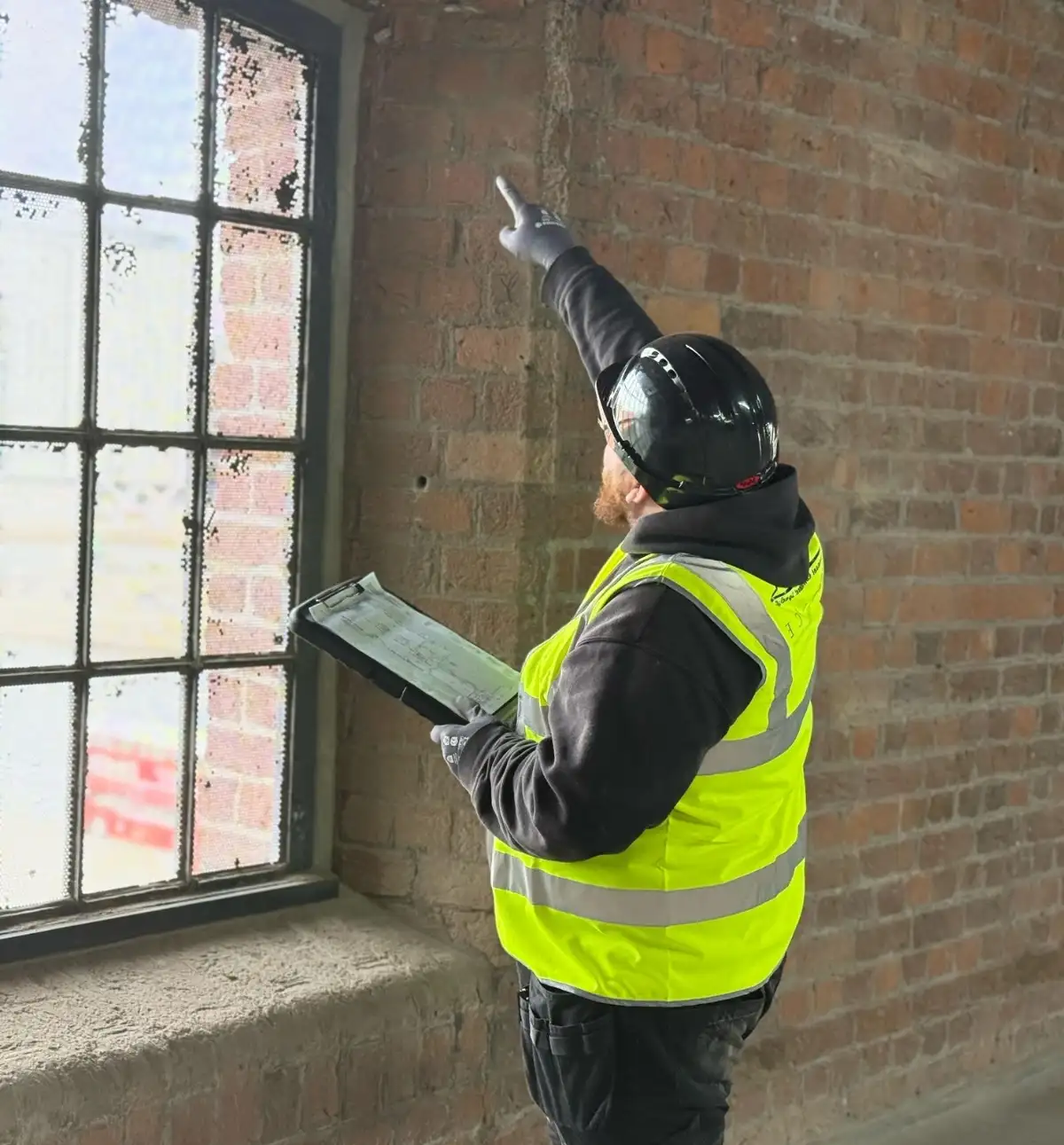
At Trace Heritage & Restoration, we investigate the cause of dampness before recommending remedial work.
Whether you own a period property, manage a listed building, are renovating an older home or have a recurring moisture problem, our aim is to understand how water is entering, moving through or being retained within the building before deciding what action is appropriate.
We understand how moisture behaves in different forms of construction, from traditional solid-wall and timber-framed buildings to modern masonry and commercial properties.
Our team includes an MRICS Chartered Building Surveyor alongside ACABE-qualified and Property Care Association-accredited professionals with experience in dampness, timber decay, insect attack, ventilation and moisture-related building defects.
A damp patch does not automatically mean rising damp. Moisture may be associated with defective gutters or drainage, penetrating rain, condensation, plumbing leaks, high external ground levels, salt contamination, bridged damp-proof courses, failed render or previous unsuitable repairs. We assess the building as a whole before recommending treatment.
Traditional buildings often rely on vapour-permeable materials and different methods of moisture management from modern construction.
Where appropriate, we may recommend lime plaster, lime-based finishes or other permeable materials that allow moisture to evaporate rather than becoming trapped within the building fabric.
However, breathable materials are only part of the solution. The underlying source of moisture must also be understood and addressed.
Trace works with homeowners, architects, conservation officers, surveyors, developers and building professionals across historic, residential and commercial properties.
Our experience spans more than 50 years of diagnosing dampness and repairing moisture-related building defects.
Not every damp wall requires damp proofing. In traditional buildings especially, moisture can result from several interacting factors including defective rainwater goods, poor drainage, inappropriate ground levels, condensation, salts, previous alterations and impermeable modern materials.
Where appropriate, we use moisture testing alongside visual investigation to help establish the nature and extent of the problem.
The objective is not simply to identify moisture, but to understand why it is present.
In some buildings, a modern damp-proofing system may be appropriate.
Depending on the construction and diagnosis, this could include a retrofit damp-proof course, localised membranes, salt-resistant finishes or other targeted remedial work.
A chemical damp-proof course is designed to reduce capillary moisture movement through masonry. However, it should only be specified where the diagnosis supports its use.
For traditional or historic buildings, other repairs may be more appropriate. These can include correcting external defects, reducing ground levels, improving ventilation or replacing unsuitable finishes with vapour-permeable materials.
Our role is to recommend the approach that best suits the building rather than applying the same treatment to every damp problem.
Lime plaster can be particularly well suited to traditional solid-wall buildings because it is vapour permeable and compatible with many historic forms of masonry.
It does not, however, remove the source of moisture.
We first investigate and address the cause of dampness. Once this has been controlled, lime plaster can form part of a repair strategy that allows residual moisture to evaporate more readily from the wall.
This can make it appropriate for period properties, listed buildings and conservation projects where impermeable modern plaster or finishes have contributed to moisture retention.
We discuss the symptoms, age and construction of the property, previous repairs and any known history of dampness.
We inspect the building internally and externally, considering materials, construction details, rainwater disposal, ground levels, ventilation and previous alterations.
Where necessary, we use appropriate testing methods to support the visual assessment and help distinguish between condensation, salt contamination, surface moisture and moisture within the building fabric.
We explain the likely cause or causes of the problem and recommend an appropriate course of action. This may involve building repairs, improved ventilation, lime plastering, damp-proofing work or further investigation and monitoring.
Where specialist work is required, Trace can undertake the repairs using materials and methods appropriate to the building.
We provide advice on drying, decoration, ventilation and future maintenance to help reduce the risk of the problem returning.